
Collier Prize Winners 2026
The 2026 winner of the $25,000 Collier Prize for State Government Accountability is KARE 11, the NBC-television affiliate in Minneapolis, for “Housing Hustle,” its investigation of Medicare fraud in Minnesota. The investigation drove sweeping state reforms and waves of federal probes and charges as it exposed a massive, organized fraud scheme within Minnesota’s Housing Stabilization Services (HSS) program.
Selected from among 110 entries from across the United States, it marks the first time a local broadcast newsroom has won the Collier Prize since its inception in 2019.
Second prize ($5,000) in this year’s competition went to CalMatters, for “License to Kill,’’ an investigation of California’s Department of Motor Vehicles. The reporting revealed California’s DMV rarely investigates drivers responsible for fatal crashes, often allowing repeat dangerous drivers to remain on the road – even after deadly incidents. Through their investigation, they built a first-of-its-kind database of over 3,600 vehicular manslaughter cases across all 58 counties, revealing how officials let dangerous drivers remain behind the wheel.
Third prize ($2,500) went to the joint Capital bureau of the Tampa Bay Times and Miami Herald for “Hope Florida,” a series of stories that exposed how the administration of Florida Gov. Ron DeSantis had orchestrated the transfer of $10 million of public money to one of the pet projects of first lady Casey DeSantis, which then made its way into the bank account of a political committee focused on defeating an initiative that would have legalized recreational marijuana and overturned the state’s six-week abortion ban.
Each of these award-winning investigations held state institutions accountable and drove meaningful change. And they accomplished their reporting despite increasing obstacles when trying to obtain public records and access to government officials in a challenging news and business environment, as a new Collier Prize survey of journalists showed.
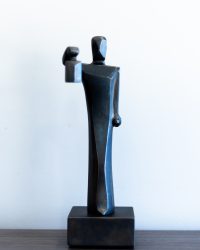
The Collier Prize is the most lucrative journalism award in the U.S. focused on state government institutions. It is administered by the University of Florida College of Journalism and Communications thanks to a generous endowment from Nathan S. Collier, a prominent Gainesville, Fl., businessman, and is open to any U.S. news organization on any platform.
The winner will receive the award at the White House Correspondents’ Association dinner in Washington D.C. on April 25, 2026.

First Prize: “Housing Hustle”
In their investigation, KARE-11 reporter A.J. Lagoe and producer Gary Knox uncovered ethical and oversight breaches at the highest levels in connection to Minnesota’s Housing Stabilization Services (HSS) program – a Medicaid-funded safety net meant to help people with disabilities and those facing homelessness find and keep housing.


Among the disclosures: a state senator who pushed legislation benefiting HSS providers while his spouse owned an HSS company, and state officials who ignored repeated fraud warnings.
The impact was swift and broad. Lawmakers and regulators rushed to enact new rules and bipartisan reforms. Federal raids were launched citing KARE’s investigation, grand jury subpoenas were issued, and prosecutors secured wire fraud indictments and convictions of company executives. In response, the governor issued executive orders and ultimately the complete shutdown of HSS.
Said one Collier juror: “KARE 11’s rigorous and piercing investigation of Medicaid fraud had undeniable impact, including suspension of more than 130 companies from the ability to bill Medicaid; the state terminating the HSS program; the firing of the state official in charge of the program; federal raids, subpoenas, indictments and convictions; and enhanced screening, oversight, and suspension powers for regulators. Ultimately, the governor called off his bid for re-election. KARE 11’s reporting involved rigorous data analysis followed by street-smart shoe-leather reporting that brought viewers into scenes where they approached fraudsters. It was hard not to keep watching.’’

Second Prize: “License to Kill”
The second place prize goes to CalMatters reporters Robert Lewis and Lauren Hepler for “License to Kill,” an investigation of California’s Department of Motor Vehicles. The reporting revealed that although the California DMV has the power to investigate drivers who cause fatal crashes, it rarely does – with tragic results.


CalMatters discovered that the DMV routinely allows drivers to stay behind the wheel despite horrifying histories of dangerous driving, including DUIs, crashes and numerous tickets. Some went on to kill. Many kept driving even after they killed someone. Some went on to kill again.
There was no central database of vehicular homicide cases to examine, so CalMatters built one. Reporters compiled court records from all 58 California counties from 2019 to 2024. It took nine months and nearly $20,000 in public records bills to create a record of more than 3,600 vehicular manslaughter cases filed in the state over five years.
From that database, reporters Lewis and Hepler delivered an ongoing series of stories exposing how officials across government – DMV leaders, judges, elected officials,prosecutors, police and court clerks – routinely allowed dangerous drivers to operate in California. Since then, nearly 200 drivers who killed someone on the road have had their driving privileges suspended or revoked, and more than 30 counties have vowed to start reporting vehicular manslaughter convictions to the DMV. Legislation is in process in Sacramento.

Third Prize: “Hope Florida”
Our third place award ($2,500) goes to the joint Capital bureau of the Tampa Bay Times and Miami Herald for a series of stories that exposed how the administration of Florida Gov. Ron DeSantis had orchestrated the transfer of $10 of public money to one of the pet projects of first lady Casey DeSantis – the Hope Florida Foundation.


It’s a group that purportedly helps Floridians in need. Reporters Lawrence Mower, Alexandra Glorioso and Justin Garcia revealed that instead, nearly all the $10 million made its way into the bank account of a political committee focused on defeating an initiative that would have legalized recreational marijuana.
By the end of 2025, the Herald/Times team showed that the DeSantis administration funneled nearly three times the amount of taxpayer dollars to political campaigns to help defeat the marijuana initiative and a second constitutional amendment that would have repealed Florida’s six week abortion ban.
The team tracked the money by tracing 29-digit account codes and 6-digit object codes across three state databases, and spent months reviewing thousands of pages of emails, vendor receipts, ad records and state payments.
The coverage – nearly four dozen stories – prompted a criminal investigation and a grand jury inquest.
Contact: Rick Hirsch, director, Collier Prize for State Government Accountability. richardhirsch@ufl.edu, 954-610-2954.
Endowing the Future
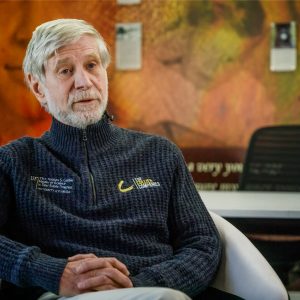
The Collier Prize is funded by a gift from Nathan S. Collier, chair of The Collier Companies headquartered in Gainesville, Florida, to encourage coverage of state government, focusing on investigative and political reporting. Collier is a descendant of Peter Fenelon Collier, who in 1888 founded Collier’s, a weekly magazine focused on investigative journalism.
In 2024, Collier committed an $8 million endowment to UFCJC — the largest in the college’s history — to sustain the Collier Prize, hire a full-time director and create a new local journalism symposium.