
Rediscovering New York City at the MET
Agnessa Safovich, PR ‘27, participated in CJCxNYC Immersive Fall 2025.
Being the only student that is from NYC in the program, I underestimated my own city. The truth is, last semester I was abroad for four and a half months, and I knew I was not ready to head back to Gainesville. When accepting my spot in the program, my thought process was simple: New York was the perfect interlude. I could be back at home, spend time with my family, look for job opportunities in the commercial art world, and stay on top of my studies. But the program was truly much more than that. I reconnected to the city in a completely new way– through a new lens. And I also made it back to my favorite hidden gem that I want to share with you all:
The Metropolitan Museum of Art. Okay, so maybe not a “hidden” gem, being it is the fourth-largest museum in the world with an annual visitor count of over 5.5 million. But, the MET maintains its grandeur status for a reason and it has become a safe space for me.

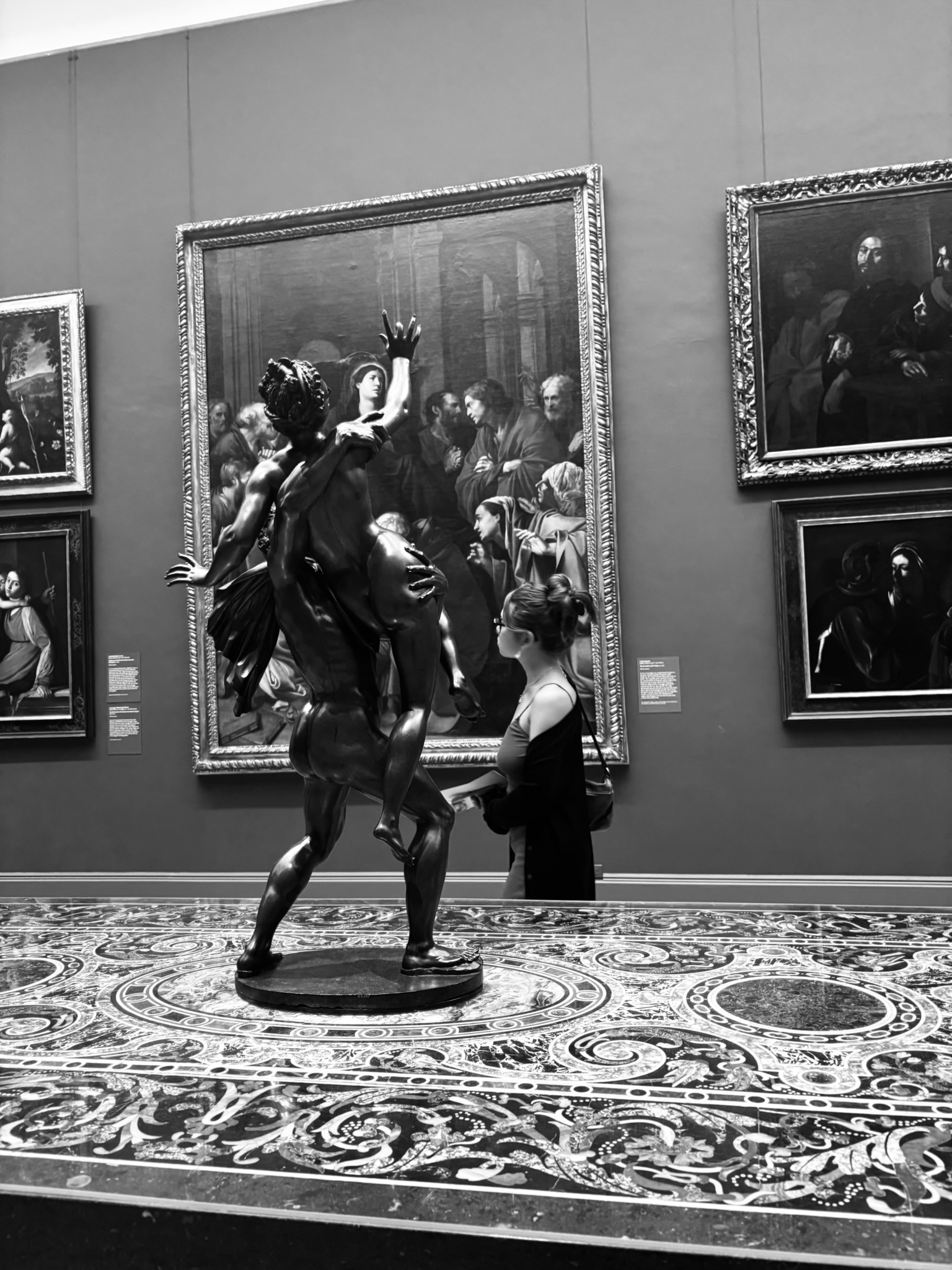
Here are my MET favorites:
William the Hippo in the MET’s Egyptian Wing—small in scale, enormous in history.
The Egyptian Wing is truly my favorite section of the MET. The collection is extensive and brings you face-to-face with artifacts that were created and existed long before New York ever did. It’s a great section of the museum to gain perspective and it’s always pretty quiet there.
William the Hippo has sort of become the MET’s mascot of sorts. You can find that little guy on all kinds of merch and his bold blue color is recognizable to all. I always make sure to make William my first stop because not only does his size and charm put a smile on my face, he carries extensive cultural significance. This guy was discovered in a tomb in Egypt’s Middle Kingdom circa 1961–1878 BCE and he is made up of Faience, made from ground quartz.
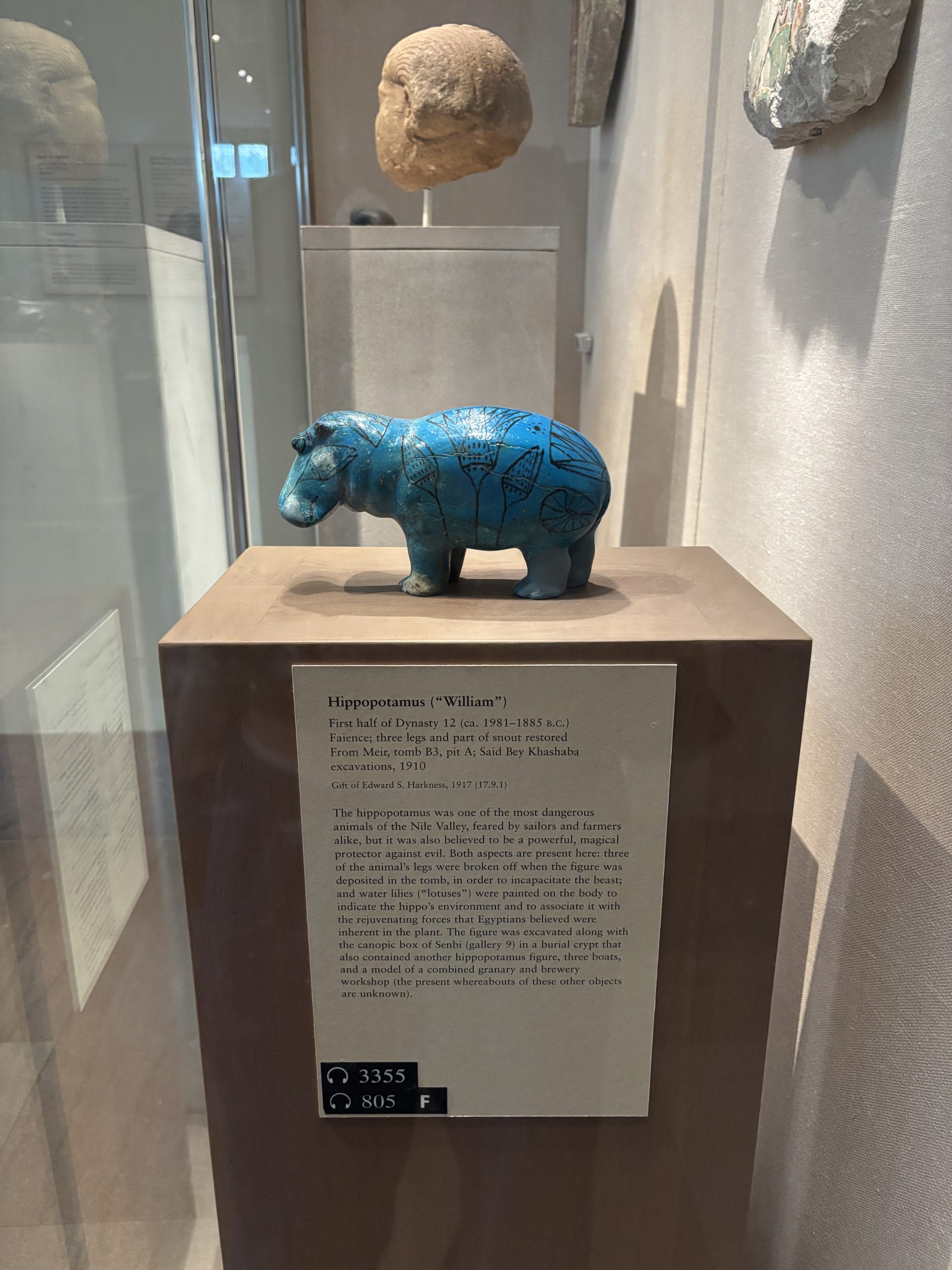
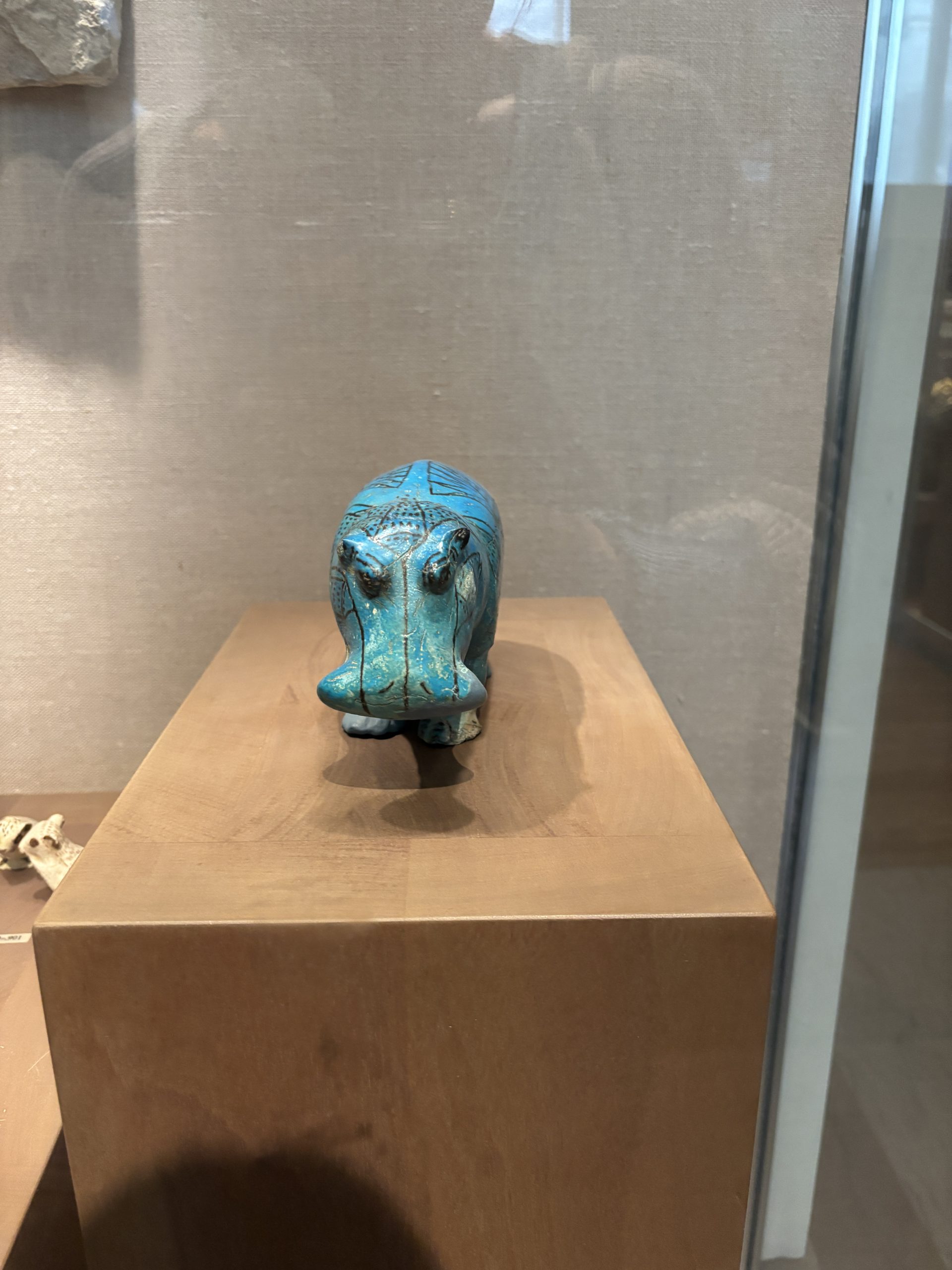
Faience was not only chosen for its beautifully illuminating color, but also because it symbolized the regenerative and life-giving powers of the Nile river, as do the lotus-flowers which are painted on William in bold lines. While he looks cute to us museum-goers now, his legs were actually intentionally broken before being placed in the tomb to prevent them from harming the deceased in the after-life. Hippos were protective but also considered incredibly dangerous and feared. It’s hard to imagine that when William is so small and docile.
Diana in the Charles Engelhard Court: Movement, Light, and Perspective.
The Charles Engelhard Court, center of the American Wing, is in my opinion the most beautiful area of the MET. It is illuminated by natural light, adorned by sculptures and Tiffany stained glass windows, and is always in a constant state of motion.
In the center of the Charles Engelhard court, stands Diana, a gold statue of a woman raised on demi-pointe standing on a globe, shooting an arrow. It was done by Augustus Saint-Gaudens, commissioned by his friend Standford White to go atop Madison Square Garden (the original one) in 1893. The first one, was not successful, as it was meant to be a weathervane, but was nearly 1,800 pounds. The second one, which is the one we get to admire at the MET, is 700 pounds, but Diana’s relaxed pose and tranquil demeanor make her seem as light as a feather.
She is a symbol of NYC just as much as she is a symbol of the MET. Her pose is dynamic—the archer mid-step, mid-breath, mid-release—and yet she also feels still, always poised, always balanced. New York is exactly like that. We perfected the balance– making things seem effortless, even when they are not. Diana who was once rotating in the wind in the center of NYC, now has others rotating around her at the center of the American Wing. Truly full circle–literally.
So, what have I learned these past months:
Every object is a story. From ancient Egyptian faience to Gilded Age sculpture, the city places thousands of narratives at your fingertips.
Context shapes communication. The same artwork means something different depending on where it’s displayed, who’s viewing it, and how it’s interpreted, just like media, branding, or journalism.
History isn’t distant. In New York, you walk through it, sit beside it, and encounter it in ways that feel immediate and alive.
This semester was not contained by classrooms, it gave me freedom to walk, talk, explore, and push myself beyond what I previously thought was the limit. The MET will always be a haven for me to gather perspective and quiet my mind (you need to in NYC), but it will also be a reminder of the opportunities at my disposal…as long as I stay curious enough to seek them out.
Category: CJCxNYC Blogs, Student Author
Subscribe to our News Digest